
The de Havilland Mosquito is less famous than the Spitfire or Hurricane fighters but was a remarkable British aircraft during the Second World War. Nicknamed the “Wooden Wonder”, the Air Ministry was sceptical of its proposed design and role in the years leading up to the start of the war. In fact, the Americans were so critical of the design, they described it as a ‘difficult design made from unsuitable materials’ as the frame was constructed mostly of wood, hence the monica “Wooden Wonder”. The design flew in contradiction to the Air Ministries doctrine of large, slow, and heavily armoured bombers. The Mosquito was designed to be fast and manoeuvrable to the point that it would not need to defend itself because it could outrun and outmanoeuvre enemy interceptors. Despite objections from the highest levels de Havilland funded the project and in trials the design proved itself beyond the wildest expectations to the point of being able to outrun the newest model of Spitfire.
Versatility of the “Wooden Wonder”
The design of the Mosquito proved incredibly versatile and various variants saw service during and after the war. BOAC maintained a fleet for transporting VIPs and valuable cargo through enemy controlled airspace on missions where speed was essential. The dispatches from the Yalta conference were transported by Mosquito. In a military capacity the RAF used the Mosquito for precision bombing, nuisance attacks, concentrated attacks, night fighting, intercepting V1 flying bombs and even sinking U-Boats.
A thorn in the side of Nazi Germany
Head of the Luftwaffe Herman Goering would regularly boast that his air force was the best in the world. On the 30th of January 1943 he was due to make a speech on German radio in celebration of the 10th anniversary of the Nazi party coming to office. This broadcast never happened because just as he was going to go on air the broadcasting station was precession bombed by Mosquitos. To add insult to injury they did it again in the afternoon ruining a speech by Joseph Goebbels. The high speed of the Wooden Wonder enabled it to evade interceptors and until the introduction of the jet powered ME 262 there was nothing that could keep pace with it. Weeks after he was knocked off air by the RAF Goering complained to German aircraft makers that the Mosquito made him “yellow and green” with envy.
War heroes of the sky
Other precise attacks include the Operation Jericho where the RAF was tasked with knocking down the walls of a prison to save French resistance fighters who were scheduled for execution. After receiving the vital intelligence from the French resistance, the bombers flew low and accurately hitting the walls with timed bombs that knocked them over and sprung open the cell doors. Prisoners were able to flee and were helped by the resistance. During Operation Aarhus Mosquitos accurately bombed the headquarters of the Gestapo in Jutland. High explosives were used to open the building and incendiary bombs used to destroy the Gestapo archives disrupting and stopping the operation of that organisation in Denmark.
The U-Boat Hunter
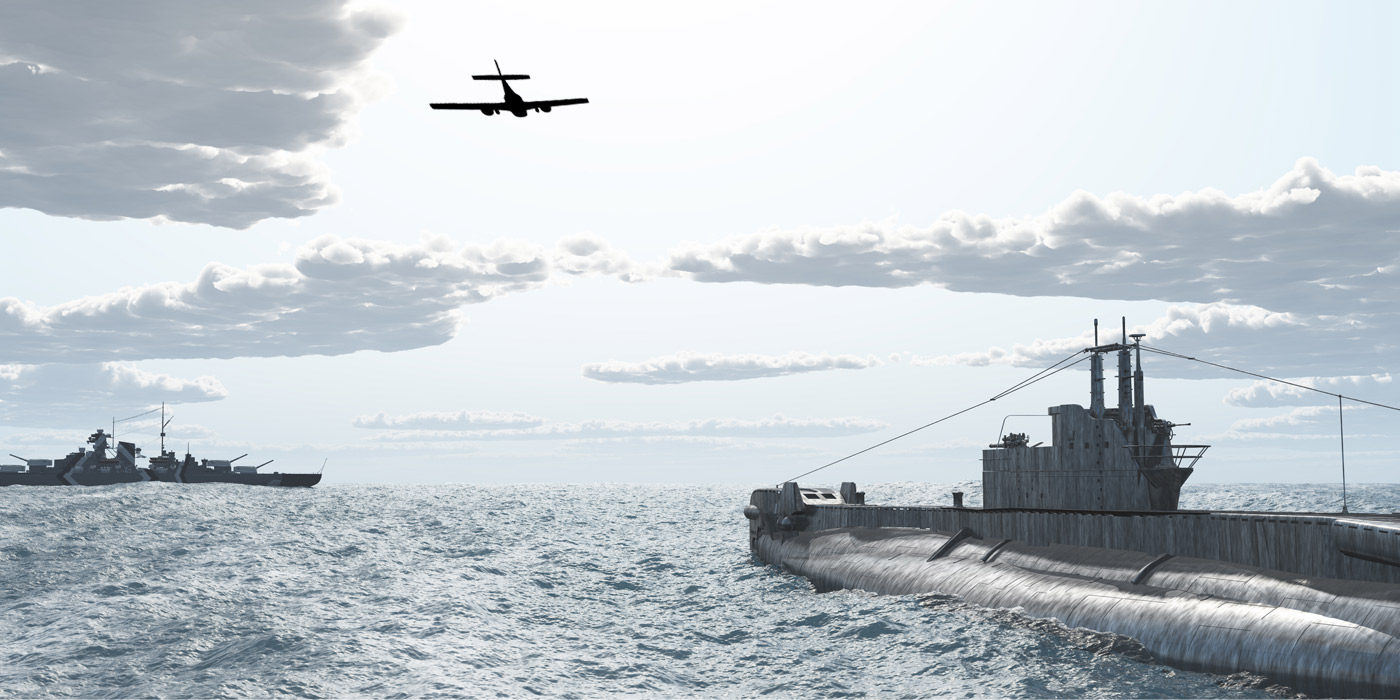
Probably the strangest Mosquito variants were fitted with anti-tank guns and sent to the Bay of Biscay to hunt U-Boats. U-Boats were a serious threat to Britain during the war and the U-Boat blockade was serious enough to even worry Churchill. U-Boats were vulnerable on the surface particularly when they were going into or out of port thus giving these mosquitos a window of opportunity to strike. Armed with the anti-tank cannon the plane would need to make a straight run at the boat and then fire. The recoil of the gun would almost stop the plane, but it was worth it because a good number of U-Boats were destroyed this way.
The final actions of the Mosquito at wars end were patrolling the Scottish coast for U-Boats that had not received the order to surrender. After the war it was replaced by jet fighters but continued in service for a time as a tug for targets eventually going out of production in the 1950s and retired from service in 1963.