
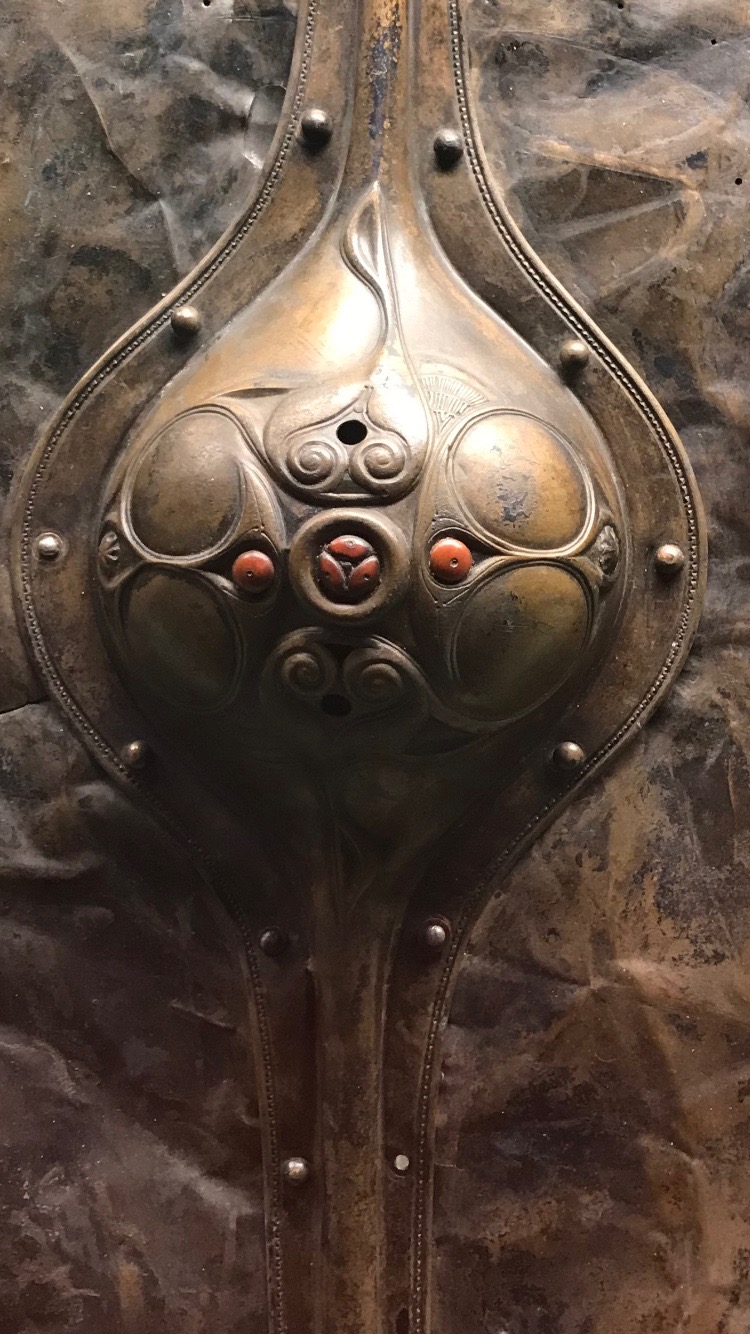
At a recent trip to the British Museum I noticed a few Iron Age British items that had been decorated with red coral. (One lovely shield boss in particular caught my eye and I took a picture, 300B.C. River Witham near Lincoln).
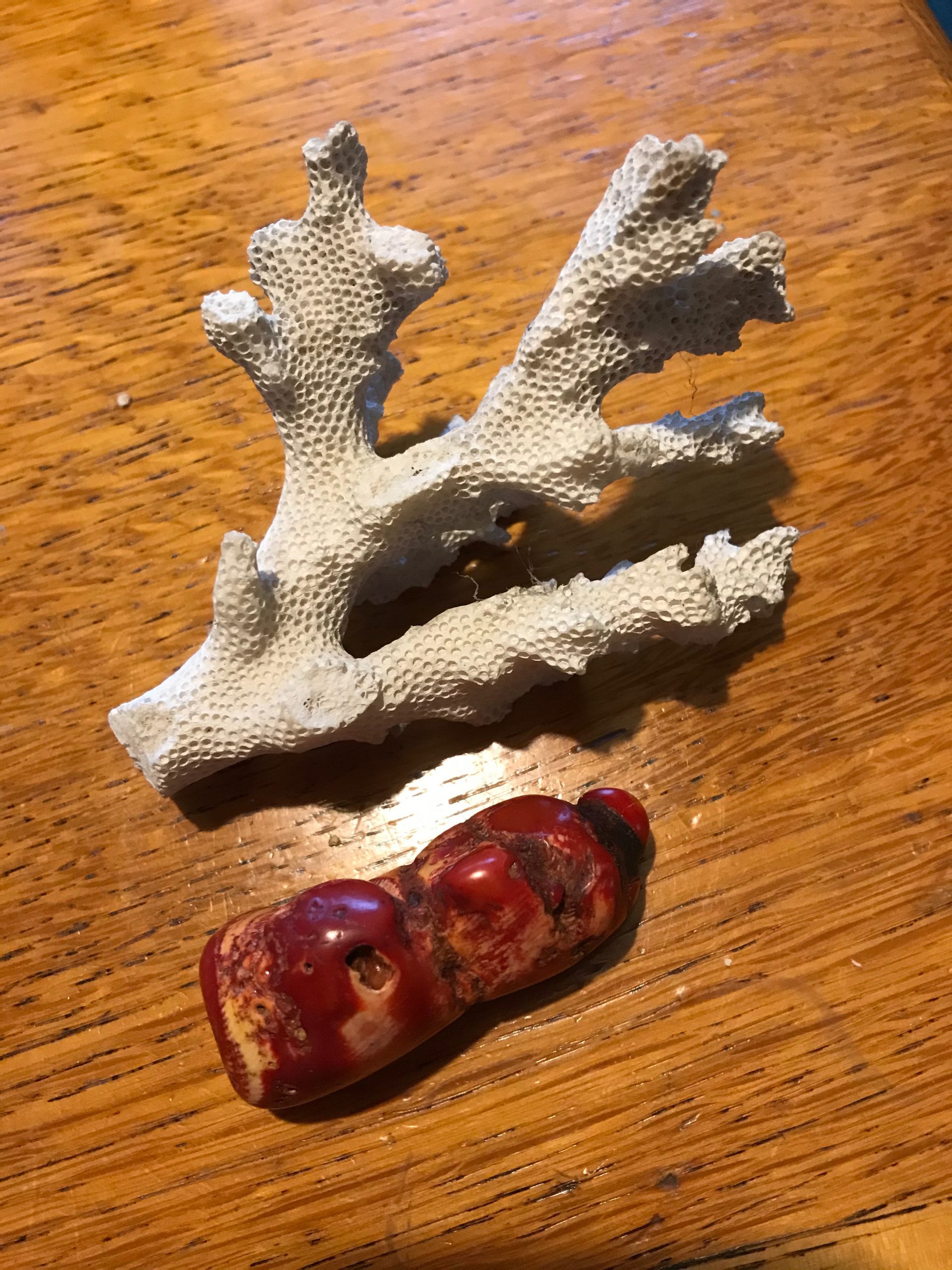 Recently I decided to purchase a small piece for discussion in my Roman school workshops. I compare it to a piece of the more common white coral.
This rather bright and striking decorative feature often survives very well on ancient objects and is easily picked out on shields and helmets. Occasionally it was used as decorative stud work on Roman helmets like the Imperial Gallic B’ (A famous example of Roman armour covered in red coral studs from the Guttman collection).
Where it comes from
Red corals tend to grow in rocky areas at the bottom of the sea, normally in darker areas like caverns or ravines. The species called Gorgonia nobilis that was used by ancient cultures is still growing in the Mediterranean Sea. It thrives in depths of about 10 to 300 meters down, but these days the shallower areas of red coral are mainly gone due to centuries of over-harvesting.
Red coral was (and still is) valuable as a decorative ornament today, you can see it used in jewellery such as necklaces, bracelets and pendants. Many ancient cultures attributed sacred properties to it, including its reputation for boosting fertility and even warding off the ‘evil eye’.
It appears that the deeper red it is, the more value (carat) is given.

Where it went to
At the beginning of the 1st millennium, there was huge trade in coral between the Roman occupied areas of the Mediterranean and India. It was highly valued in ancient India for what was considered to be its sacred properties.
However, there’s plenty of examples in archaeology that supports the Gauls (and indeed Britons) using it to decorate weapons and armour.
But this is also backed up by narrative evidence:
Pliny the Elder* ‘Natural Histories’ Chapter 11
‘Before it was known in what estimation coral was held by the people of India, the Gauls were in the habit of adorning their swords, shields, and helmets with it; but at the present day, owing to the value set upon it as an article of exportation, it has become so extremely rare, that it is seldom to be seen even in the regions that produce it.’
*Pliny the Elder died on a beach… not looking for red coral, but trying to evacuate a whole town after a certain large Italian volcano had a temper tantrum in 79AD*